Astronomy Facts That Make the Universe Even More Mysterious
The more humanity learns about the universe, the less complete the picture seems to become. Each new discovery reveals not just answers, but deeper and more complex questions. What once appeared as a vast but understandable system is now understood as something far stranger. Filled with forces, events, and structures that challenge even the most advanced scientific theories.
Modern astronomy has pushed observation further than ever before, allowing scientists to detect phenomena across billions of light-years. Yet with this expanded view comes a growing realization: much of the universe operates in ways that remain fundamentally unexplained. From invisible matter to signals that defy prediction, the cosmos continues to resist simple interpretation.
Fast Radio Bursts Send Signals We Still Can't Decode
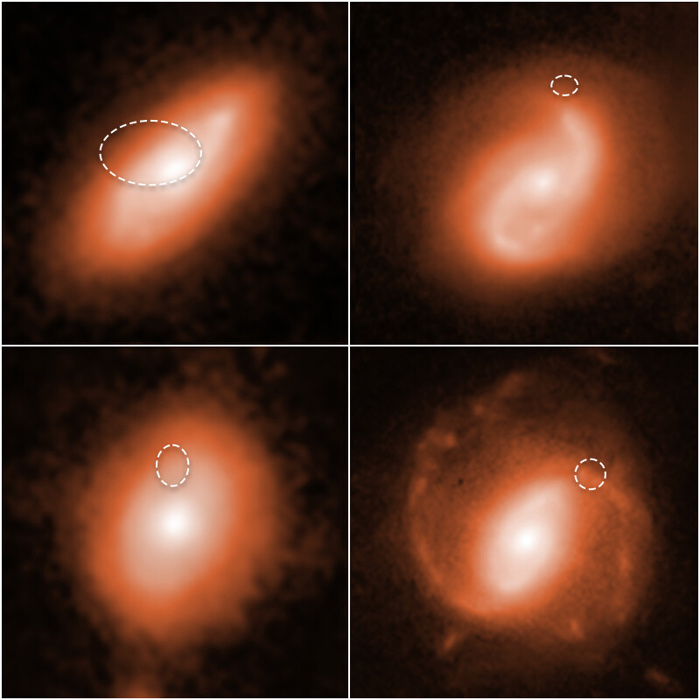
Among the most puzzling discoveries of modern astronomy are fast radio bursts (FRBs), intense flashes of radio waves that last only milliseconds yet release enormous amounts of energy. Some of these bursts emit as much energy in a fraction of a second as the Sun produces over several days. This makes them one of the most powerful known phenomena in the universe.
Scientists have traced certain bursts to magnetars—neutron stars with extremely strong magnetic fields—but this explanation does not account for all observed behavior. Some FRBs repeat, while others occur only once, and their patterns vary widely. The signals also carry distortions caused by traveling through intergalactic space, offering clues about their origins but no definitive answers.
Despite detecting thousands of these events, their exact cause remains uncertain. FRBs represent a category of cosmic activity that is only partially understood, highlighting how even observable phenomena can resist clear explanation.
The Oh-My-God Particle That Broke High-Energy Physics
Fast radio bursts aren't the only cosmic signals that leave physicists scrambling for answers. On October 15, 1991, Utah's Fly's Eye camera detected something extraordinary — an extremely energetic cosmic ray carrying 3.2×10²⁰ eV of energy. Researchers called it the Oh-My-God particle, and understandably so.
Consider what that energy means: it's 40 million times greater than anything terrestrial accelerators produce, equivalent to a 140-gram baseball traveling at 100 km/h, packed into a single subatomic particle. It even violates the GZK cutoff, the theoretical energy limit cosmic rays shouldn't exceed.
Despite hundreds of similar detections since, cosmic origins remain unidentified. No known astronomical object matches the particle's trajectory. Modern observatories spanning 3,000 km² in Argentina continue investigating, but the mystery stubbornly persists. The available collision energy with nitrogen in Earth's atmosphere reached approximately 2,900 TeV — around 200 times the highest collision energy ever achieved by the Large Hadron Collider.
Black Holes: The Darkest and Brightest Objects in Space
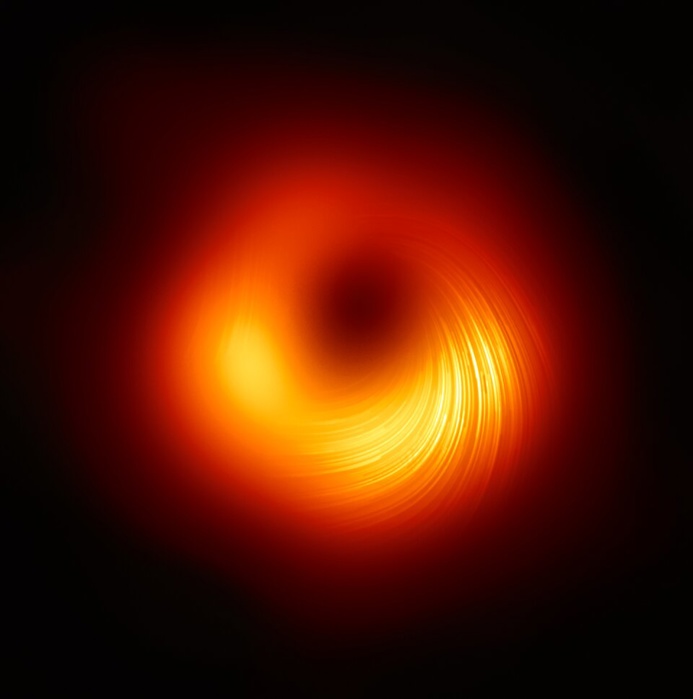
Black holes stand out as both the darkest and brightest objects in the universe — a contradiction that makes perfect sense once you understand their mechanics. Event horizon imaging reveals a boundary where nothing — not even light — escapes. Yet surrounding that boundary, accretion dynamics produce extraordinary brilliance:
- Infalling gas heats up and radiates intensely, sometimes outshining entire galaxies
- Sagittarius A*'s accretion disk produces rapid flickers and flares detectable by the James Webb Space Telescope
- The plunging region near the event horizon emits thermal radiation even as matter spirals inward at near-light speeds
You're effectively looking at nature's ultimate paradox — a void so dense it traps everything, yet violent enough to illuminate the cosmos around it. Stellar-mass black holes are commonly detected through X-ray emissions produced when gas pulled from a companion star forms a superheated accretion disk.
Early Supermassive Black Holes Formed Too Fast to Explain
One of the biggest mysteries in cosmology is how supermassive black holes formed so quickly after the Big Bang. Observations show that some of these massive objects already existed when the universe was less than a billion years old.
Traditional models suggest that black holes grow gradually over long periods. However, the size of these early black holes implies a much faster formation process. This discrepancy has led scientists to explore alternative theories, including rapid growth mechanisms and the possibility of primordial black holes.
These findings suggest that the early universe may have behaved differently than current models predict. Understanding how these objects formed could reshape fundamental ideas about cosmic evolution.
Crack open more surprising facts and trivia from the world of astronomy.
Dark Matter Makes Up the Universe: And Still Hides
Most of the universe's mass is invisible — and that's not a figure of speech. Dark matter makes up roughly 85% of all matter, yet it doesn't emit, reflect, or absorb light. You can't see it, but you can see what it does. It concentrates in galactic halos, pulling ordinary matter into the galaxies you observe today. Without it, large-scale cosmic structures simply wouldn't exist.
Here's what makes it stranger:
- Scientists detect it only through gravitational effects on visible matter
- No confirmed particle candidates have been identified despite decades of searching
- Within Neptune's entire orbit, dark matter totals just ~10¹⁷ kg — asteroid-scale mass
You're living inside something that dominates the universe, and science still can't tell you what it actually is. The universe itself is composed of only 5% ordinary matter, with dark matter and dark energy accounting for the remaining 95% of total mass-energy content.
Dark Energy Is Quietly Tearing the Universe Apart
While dark matter keeps the universe together, dark energy is quietly pulling it apart. Making up roughly 68–70% of the observable universe, dark energy functions as a repulsive force, counteracting gravity on cosmic scales. Whether it represents vacuum pressure in empty space or an evolving scalar field, scientists still don't fully understand it.
What's remarkable is that dark energy's density stays constant even as the universe expands. About 5 billion years ago, it overtook matter's gravitational pull and began accelerating expansion. Under the "Big Rip" scenario, it could eventually tear apart galaxies, solar systems, and even atoms.
However, a 2025 study suggests dark energy may actually be weakening. NASA's Nancy Grace Roman Space Telescope, launching by May 2027, aims to investigate further. Some scientists even propose that dark energy may not be a physical entity at all, but rather a flaw in general relativity that requires a modified understanding of gravity to resolve.
How Fast Radio Burst FRB 121102 Repeated 93 Times in One Day
From forces reshaping the universe on the grandest scales, we shift to something just as bewildering but far more sudden — a single cosmic object that fired off bursts of radio energy at a staggering rate.
FRB 121102 doesn't just repeat — it clusters its activity in ways that defy easy explanation. Its activity modulation follows a 156.1-day cycle, alternating active and silent windows. Here's what makes its burst clustering so striking:
- Each millisecond burst releases energy equal to three days of the Sun's total output
- 72 bursts were captured in just five hours in September 2018
- FAST detected hundreds of bursts across August–September 2022 alone
No confirmed source fully explains this behavior. The source sits 3 billion light years away, yet its bursts arrive twisted by magnetized plasma more than 500 times beyond anything recorded from other fast radio bursts.
Tabby's Star Dims in Patterns No Model Fully Explains
Turning from sudden bursts to slow, creeping dimness, Tabby's Star — formally KIC 8462852 — baffles astronomers with light dips no existing model fully explains. You're looking at a star whose dimming mechanisms defy every conventional framework.
Citizen scientists first flagged brightness drops of 15% and 22%, far exceeding what any Jupiter-sized planet could produce. Century-long photographic records reveal a 20% fade between 1890 and 1990. Kepler data confirms 0.34% annual dimming, then a sudden 2.5% drop over 200 days.
Stellar variability alone doesn't account for wavelength-dependent dimming, 1,600-day repeating patterns, or irregular brightening events. Proposed explanations — dust clouds, fragmented exomoons, swarms of comets — each explain fragments but never the complete picture. Researchers at the SETI Institute have even pursued follow-up observations using the Allen Telescope Array, scanning for radio signals that might reveal an artificial origin behind the star's inexplicable behavior.
The Hubble Tension Is Splitting Cosmology in Two
Buried deeper in cosmology's unsolved mysteries, the Hubble tension isn't just a minor disagreement — it's a 5σ crack running through the standard model of the universe. Two independent measurement camps keep producing conflicting results:
- Local measurements using Cepheid stars and Type Ia supernovae yield 73–74 km/s/Mpc
- CMB measurements from the Planck satellite yield 67.4 ± 0.5 km/s/Mpc via ΛCDM modeling
- The gap persists even as measurement uncertainties shrink
You're watching cosmologists wrestle with whether local structure is distorting nearby observations or whether new physics beyond the standard model is required. Neither side is backing down. Both methods are methodologically sound, yet their answers are fundamentally incompatible.
The universe's expansion rate can't simultaneously satisfy both — something's either missing or broken in our current understanding. Much like an application not available error signals a fundamental breakdown between infrastructure components that should be working together, this tension signals a breakdown in our cosmological framework.
Conclusion
The deeper astronomy explores, the more complex the universe becomes. Each discovery reveals new layers of mystery, challenging existing theories and expanding the boundaries of knowledge. These unresolved questions are not failures—they are opportunities.
They point toward areas where understanding is still developing, guiding future research and exploration. The universe remains mysterious not because it lacks answers, but because it continues to reveal new questions. And in that sense, its greatest quality may not be what is known, but what is still waiting to be discovered.