Why the Universe Remains a Powerful Symbol in Pop Culture
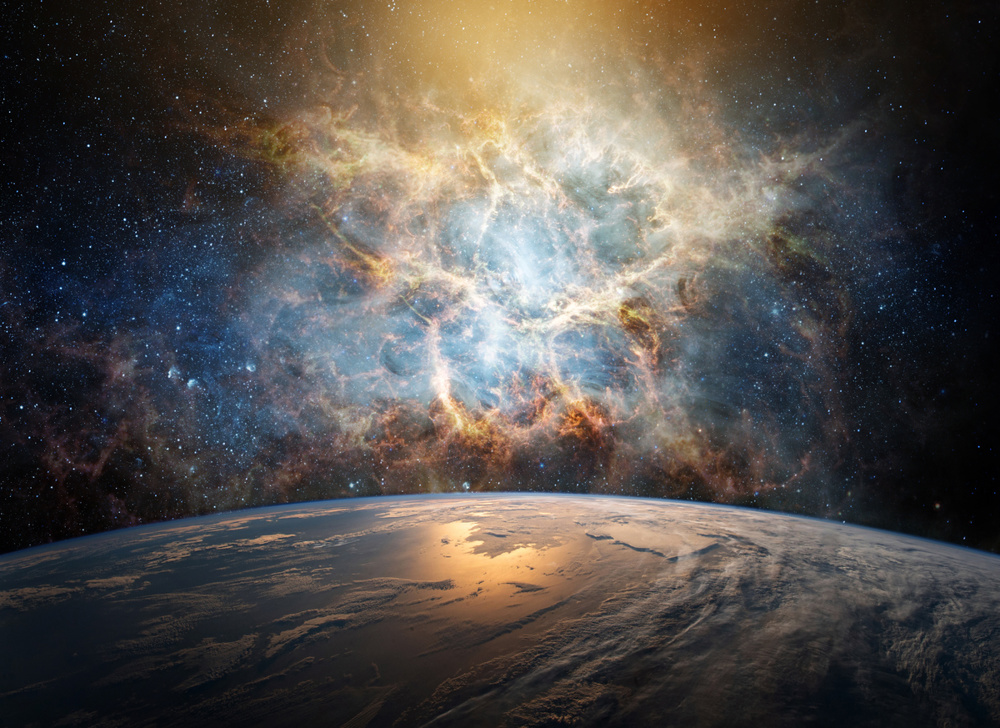
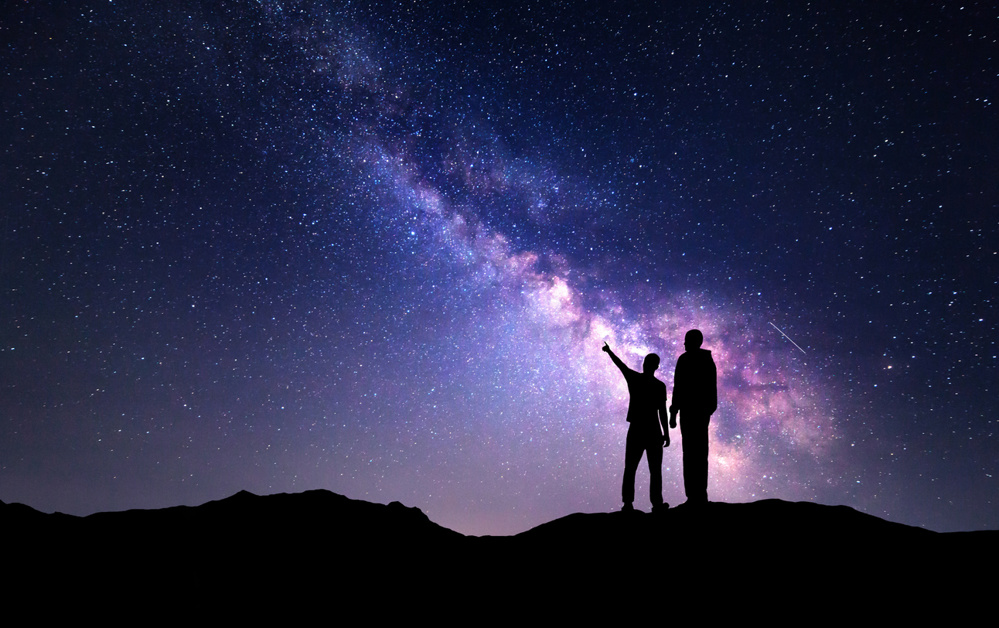
The universe has always been more than a physical space—it has been a canvas for human imagination. In modern pop culture, it functions as a symbolic language, shaping how stories are told and how meaning is constructed. From music and film to visual art and digital media, cosmic imagery appears again and again, not simply for spectacle, but for what it represents.
What makes the universe such a persistent symbol is its flexibility. It can suggest isolation or connection, chaos or order, insignificance or transcendence. In a cultural moment where traditional frameworks of meaning feel less stable, pop culture turns to the cosmos as a way to explore identity, belonging, and purpose. The result is a visual and narrative system that feels both expansive and deeply personal.
What Does the Universe Actually Symbolize in Pop Culture?
The universe has long served as a canvas for humanity's deepest questions, and pop culture reflects this beautifully. When you listen to David Bowie's "Space Oddity" or Elton John's "Rocket Man," you're hearing cosmic longing translated into melody—an ache for something beyond ordinary existence.
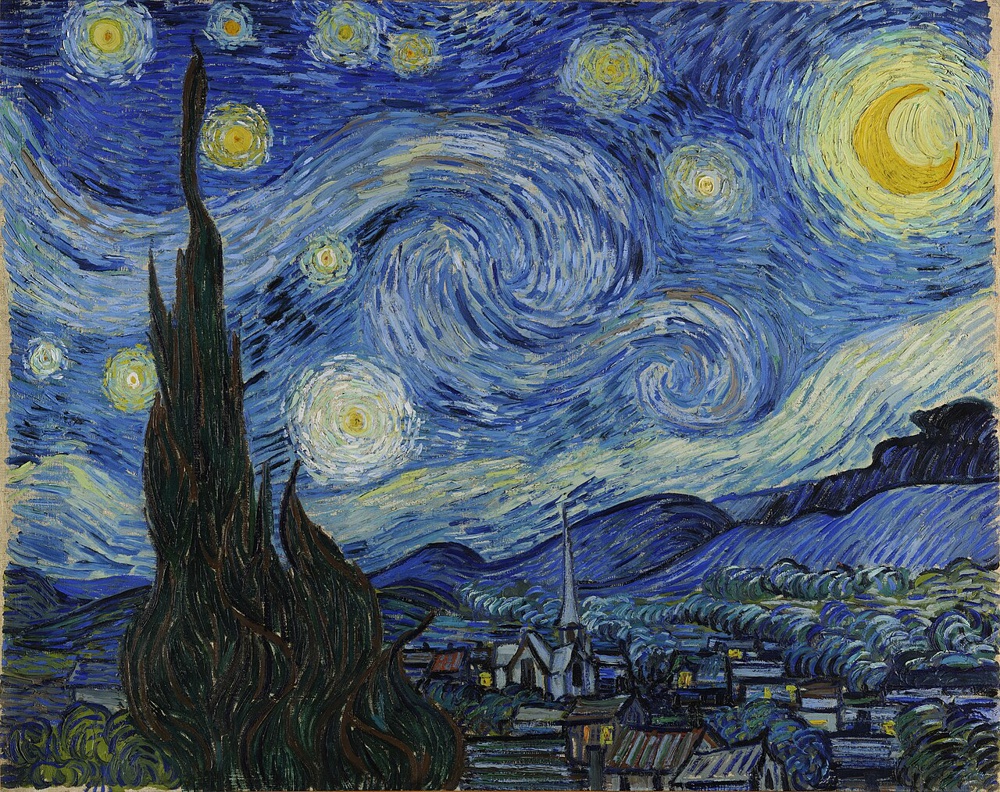
The Beatles' "Across the Universe" and Van Gogh's "Starry Night" push this further, transforming celestial imagery into emotional truth. You'll also notice how films use the universe for existential navigation. "The Lion King" turns stars into ancestral guidance, while "Star Wars" builds entire mythologies around Jungian archetypes. Greek mythology, Campbell's monomyth, and astrological symbolism all reinforce this pattern.
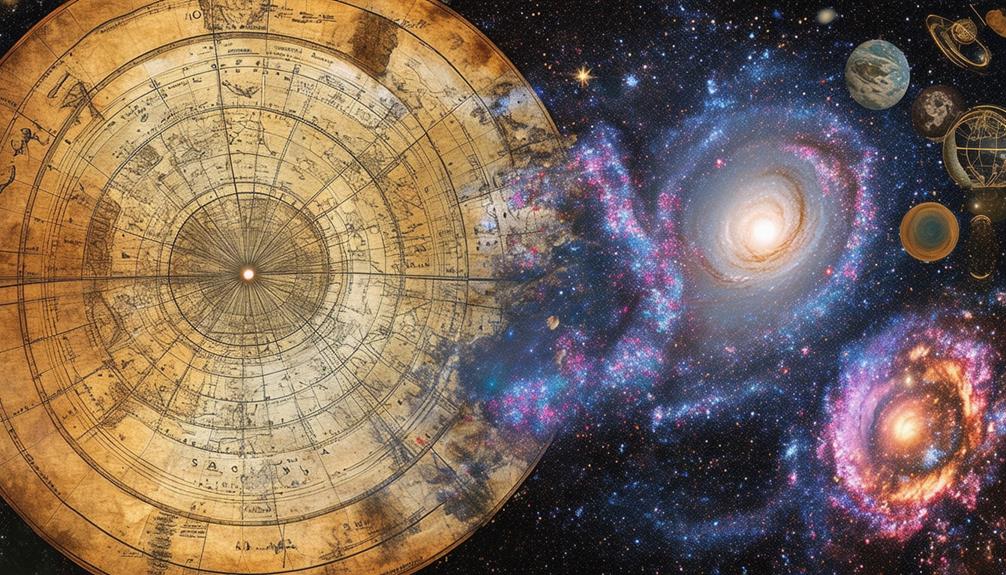
The universe doesn't just represent outer space—it represents the human search for meaning, identity, and connection. Ancient myths and legends from Greek, Egyptian, and Mayan civilizations used celestial events to explain the movements of stars and planets. It embedded cosmic symbolism into the very foundation of human storytelling and cultural identity
Why Humans Have Always Searched the Stars for Meaning
Beneath all the cosmic imagery in pop culture lies something more primal—your brain is literally built for this. Evolutionary purpose shaped your neural architecture to seek meaning, plan for the future, and locate yourself within a larger story. That's what separates you from other animals.
Ancestral stargazing wasn't a casual curiosity. Stoic philosophers dissolved their individual identities into cosmic wholeness by studying the stars. Indigenous and religious traditions built entire origin frameworks around the cosmos, giving people comfort, certainty, and motivation.
That hunger hasn't disappeared—it's intensified. Modern isolation, born from worldviews that cast humans as detached observers of a mechanical universe, left people searching. Contemporary cosmology now offers something ancient myths always provided: a story big enough to place yourself inside.
The Real Science Behind Pop Culture's Space Obsession
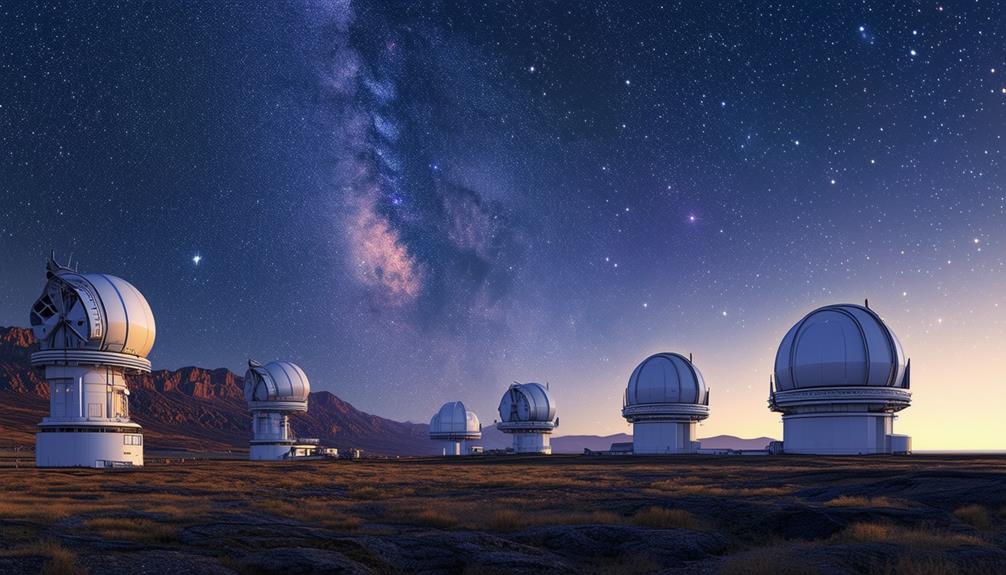
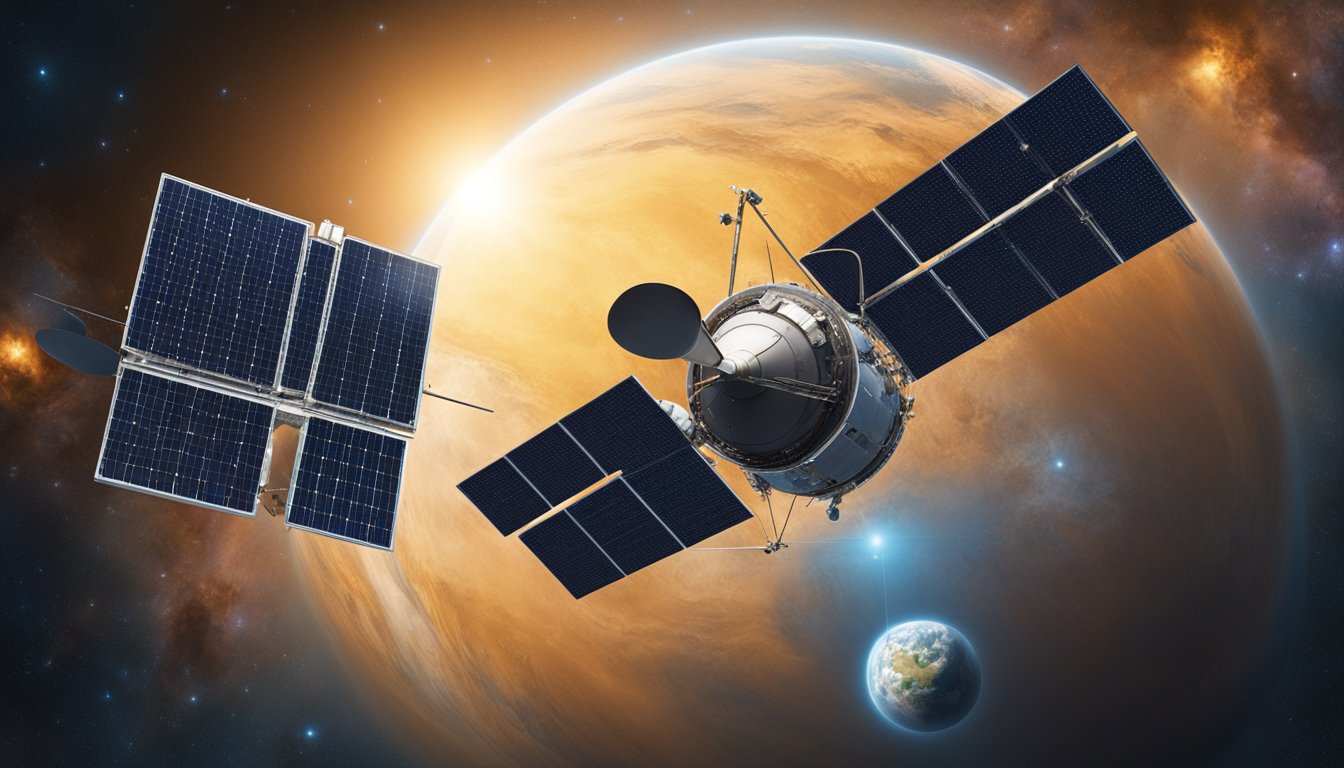
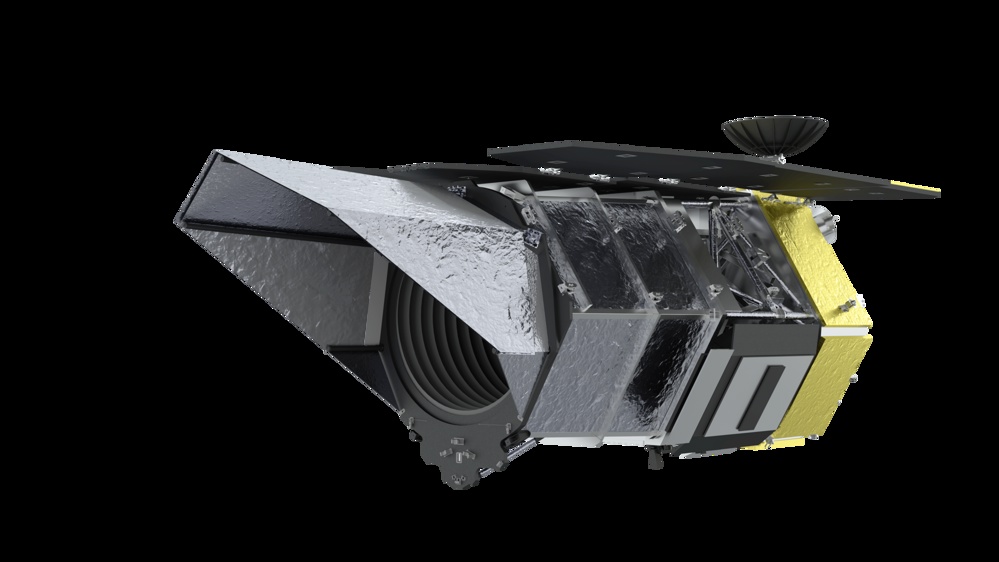
What feeds your fascination with space isn't just mythology or metaphor—real science is accelerating faster than most pop culture can keep up with. By 2026, the Nancy Grace Roman Space Telescope will photograph distant exoplanets, while PLATO monitors 200,000 stars for habitable worlds. Nuclear thermal propulsion now achieves double the efficiency of chemical rockets.
AI autonomously navigates deep-space missions, reducing human error across vast distances. Artemis II will carry astronauts beyond low Earth orbit for the first time since 1972. These aren't fictional premises—they're active missions. Your science literacy sharpens when you recognize what's real versus dramatized.
That distinction matters for cultural critique too, since pop culture often romanticizes space while underplaying the precision, risk, and engineering that genuine exploration actually demands. Events like Georgia Tech's 2026 Frontiers in Science convene more than 25 experts across planetary science, robotic exploration, and human spaceflight to bridge exactly that gap between public imagination and scientific reality.
How Music Turns Cosmic Space Into Emotional Experience
While real-world space exploration demands cold precision and engineering rigor, music takes the opposite route—it makes the cosmos feel personal. Through spatial ambiance and temporal dilation, music reshapes how you experience both sound and emotion. Here's what the science confirms:
- Spatial audio contributes up to one-third of perceived recording quality
- Warm-toned spaces boost music scores by 1.09 points over cold environments
- Quiet spaces push music's stimulating effect ratings to 50%
- Positive music shrinks your personal space; negative music expands it
- Presence levels directly correlate with emotional reaction intensity
When you listen to cosmic-themed music, you're not just hearing notes—you're entering a constructed emotional environment. Engineers use pan pots and delays to simulate inter-aural differences, placing sounds precisely within a manufactured space your brain interprets as real. Space becomes something you feel, not just something you observe.
Check out MrPopCulture.com and learn more about pop culture trends in space and universe.
Cinema and the Rise of the Cosmic Narrative
Film has been one of the most powerful vehicles for translating cosmic ideas into cultural experience. Directors use space not only for visual scale, but for emotional and philosophical exploration. Movies like 2001: A Space Odyssey and Interstellar transform the universe into a space of introspection, where human existence is examined against an infinite backdrop.
At the same time, blockbuster franchises have turned the cosmos into serialized storytelling. The Marvel Cinematic Universe and Star Wars expand across multiple films and timelines, creating interconnected systems that audiences can follow over years. These narratives offer continuity, structure, and a sense of participation.
This shift has changed how audiences engage with stories. The universe is no longer just observed—it is inhabited. Through recurring characters and expanding lore, viewers develop long-term relationships with these cosmic worlds, reinforcing their emotional and cultural impact.
Astrology, Archetypes, and Symbolic Identity
Beyond science, the universe also operates as a symbolic system rooted in identity. Astrology, for example, has found renewed popularity through social media, where zodiac signs function as shorthand for personality and behavior. These symbols offer a way for individuals to interpret themselves within a larger framework.
This connects closely to Jungian archetypes and Campbell’s monomyth, both of which appear frequently in cosmic storytelling. Characters in space narratives often follow familiar patterns—the hero, the guide, the transformation—mapped onto a universal scale.
These symbolic systems persist because they provide structure. In a fragmented cultural landscape, the universe offers a way to organize identity, giving individuals a sense of place within something larger than themselves.
Franchises and the Rise of Secular Spirituality
One of the most significant shifts in pop culture is the rise of cinematic universes as forms of secular spirituality. Traditional religious frameworks once provided shared narratives and rituals. Today, franchises like the MCU or Star Wars fulfill similar roles.
These systems offer continuity, mythology, and participation. Fans follow long-term story arcs, engage in discussions, and revisit narratives in ways that resemble ritual. The universe itself becomes a higher-order system—structured, expansive, and meaningful.
This doesn’t replace religion directly, but it reflects a shift in how meaning is constructed. Pop culture provides a shared space where existential questions can be explored collectively, using the universe as its central symbol.
Why Pop Culture Keeps Borrowing Quantum Theory for Drama
Quantum theory didn't just stay in the laboratory — pop culture grabbed it and never let go. Through quantum marketing, brands, filmmakers, and storytellers exploit its mysterious vocabulary to signal intelligence, futurism, and wonder. Fictional decoherence occurs when accurate science collapses into dramatic convenience, leaving audiences inspired but misinformed.
You'll recognize quantum theory's cultural fingerprints everywhere:
- Superposition powers multiverse-hopping Marvel heroes
- Entanglement becomes shorthand for mystical connection
- Many-Worlds theory fuels parallel-reality storylines
- Schrödinger's cat frames life-or-death narrative tension
- Quantum tunneling justifies impossible plot escapes
This borrowing creates a feedback loop — inspiring artists and technologists while frustrating scientists. You're simultaneously watching genuine curiosity and reckless oversimplification shape how humanity understands its universe. Pseudoscientific ideas spread most aggressively when entertainment blurs the line between fictional quantum spectacle and the empirical science of subatomic particles.
Merchandising, Fandom, and Tangible Mythology
The influence of cosmic storytelling extends into physical objects through merchandising and fandom culture. From branded apparel to collectible figures, the universe is translated into tangible forms that fans can own and interact with.
These objects reinforce emotional connection. Wearing a Star Wars shirt or collecting Marvel memorabilia allows individuals to carry part of these narratives into their everyday lives, turning abstract stories into something physical and personal.
This material presence strengthens the idea of pop culture as modern mythology. The universe is no longer confined to screens or stories—it becomes something that exists in the real world, reinforcing its role as a shared cultural system.
What the Cosmic Obsession Reveals
The persistence of cosmic imagery in pop culture reveals something fundamental about contemporary life. It suggests a continued search for meaning in a world where traditional structures feel less certain. The universe provides a framework that is vast enough to contain these questions.
At the same time, it reflects a desire for connection. By placing individual experiences within a larger context, cosmic narratives create a sense of belonging that transcends immediate surroundings. They allow people to see themselves as part of something bigger.
This dual function—questioning and connecting—is what gives the universe its lasting power. It operates as both mirror and map, reflecting human concerns while offering a way to navigate them.
Conclusion
The role of the universe in pop culture is unlikely to fade. As technology advances and new forms of media emerge, the ways in which cosmic imagery is used will continue to evolve. Virtual reality, interactive storytelling, and AI-driven narratives will expand how audiences engage with these ideas. What will remain constant is the need for meaning.
Looking ahead, the cosmos will continue to function as more than a setting—it will remain a language. One that translates uncertainty into narrative, scale into emotion, and distance into connection, ensuring its place at the center of pop culture for years to come.
Related posts